Container Transport in Wacol
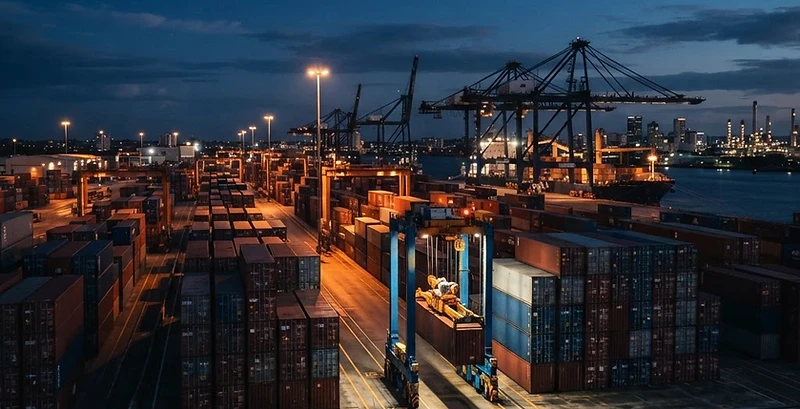
Wacol sits in Brisbane's south-west industrial belt, where the Ipswich Motorway, the Logan Motorway and the Centenary Highway converge. The land here is given over to warehouses, distribution centres and transport yards rather than housing, and almost every container that reaches those sites arrives by road from the Port of Brisbane. This page sets out how container transport in Wacol is planned: import pickups from the wharf, export loads back to the terminal, sideloader drops for sites with no forklift, skel deliveries to warehouse docks, empty returns, and moves between yards in the western corridor. To book a job, send us the container details or call 0407 977 529.
Wacol in the south-west freight network
Three motorways frame the area. The Ipswich Motorway runs along the northern edge, the Logan Motorway sits to the south, and the Centenary Highway closes off the eastern side, which is why so much freight simply passes through on its way somewhere else. Two things follow from that for a container job. The first is that the port leg is a motorway run, so the terminal window and the receiver's hours set the schedule rather than anything we choose. The second is that the surrounding corridor is dense with industrial land — Darra, Richlands and Inala all sit within the same belt — so a container delivered to one estate often has to move again afterwards.
Import containers from the wharf to a Wacol warehouse
An import container begins its journey on a ship at the Port of Brisbane. It is discharged, the shipping line releases it, and it is lifted onto a truck that holds the right terminal access and a booked slot. From there the box runs west to the delivery address. What decides whether the job goes smoothly is rarely the drive; it is whether the receiving warehouse is ready. Dock heights, gate hours, check-in steps and the person who controls the dock booking all matter, and a container turned away at the gate has to be rebooked and brought back. Tell us who the receiver is and what their receival rules are, and the run is built around those rules instead of around an assumption.
Getting export loads back to the terminal before cut-off
Export work runs in the other direction. A packed container is collected from a Wacol yard or warehouse and delivered to the port inside the export receival window so that it makes its sailing. That cut-off is fixed. Miss it and the box rolls to the next vessel, which means reworking the booking, the slot and the delivery. We plan the pickup backwards from the cut-off, allowing for the terminal slot, the time needed to load at your end, and the road leg to the wharf. If the container will not be packed and ready in time, we would rather tell you before a truck is dispatched than have it arrive at a gate that will not accept it.
Sideloader drops to yards with no forklift
Many Wacol sites have no dock and no lifting gear at all. Trade yards, workshops, storage lots and smaller tenancies often take a container straight onto the ground, and that is a sideloader job. A sideloader carries its own lifting equipment, picks the container up from the side of the trailer and sets it down beside the truck, so nothing is needed at your end beyond firm, level ground and clear space next to the placement position. Before confirming the job we ask for the gate width, the surface, anything overhead such as power lines or branches, and a photo of where the box should sit. Our sideloader page explains the equipment, and the container delivery page covers the site checks in more detail.
Skel deliveries to warehouse docks
Where a Wacol warehouse does have a dock, the standard method is a skeletal trailer. The trailer is a bare frame, the container sits on it, and the truck reverses the skel into the dock so that the warehouse forklift can unload straight through the doors. Dock work is procedural, and the procedures vary. Some sites run a booking system, some keep fixed gate hours, and some will not accept an early or late arrival at all. Tell us the dock number, the receival hours and the contact who meets the driver, and the arrival is planned around those rather than guessed at.
Empty returns after unpacking
Once an import container is unpacked it has to go back to the shipping line. The return advice names the container park the line wants it delivered to and the date it is due. That park is not always the nearest one and it is not always in Wacol, but the return still has to happen inside the park's receival hours with paperwork that matches the box. Return an empty late and the line's detention charges begin to run against the container. We treat the return as a job in its own right: collect the empty from your site, run it to the named park, and confirm the receipt so the container can be closed out. Our empty container transport page covers how returns work across Brisbane.
Yard-to-yard moves in the western corridor
Not every Wacol container job involves the port. Containers are repositioned between yards constantly — from a depot to a tenant's hardstand, from one estate to another, or from Wacol out to a site further west at Sumner, Goodna or Redbank. These moves are shorter and simpler than a wharf job, but they still need the container details, both addresses, and a clear understanding of how the box will be lifted at each end. Where the destination sits further out along the corridor, our Ipswich area page covers the western end of the same road.
The box sizes we move
Container size changes a job more than it might appear. A 20ft box is short enough to travel on a skeletal trailer or a sideloader, and its smaller footprint makes it the easier option where yard space is tight. A 40ft needs a trailer or sideloader built for the length, and it needs more room to be swung into position. A 40ft high cube adds height, which becomes a real constraint at a dock and under overhead services during a sideloader drop. Send the size and type with the booking and the right combination of truck and trailer is matched to it.
What to send us to plan a Wacol container job
- The container number, its size and its type
- The job type — an import pickup, an export delivery, an empty return or a move between yards
- Both addresses, together with the receiver's name
- How the box will be handled on site: dock, forklift or sideloader
- Any deadline attached to the container, such as a terminal cut-off or a return-by date
With those five details we can usually confirm what the job needs and how it will run. Send them through and we will come back with a plan.
Frequently asked questions
Yes. Where the warehouse has a dock, a skeletal trailer is reversed in and the site's forklift unloads the container through the doors. Where the site is ground-level only, a sideloader sets the container down without any lifting gear being needed on site. Tell us the delivery address and how the box will be handled and the right truck is sent.
Get a free container transport quote
Send us the container details and we will reply with a plan and a quote.